FOR IMMEDIATE RELEASE
(Reading, UK) M-Brain, a leading global supplier of market analysis and competitive intelligence tools, has recently announced its latest release updates (v 7.6) to market intelligence software, Intelligence Plaza.
Intelligence Plaza is globally recognized as being the leading repository system for market intelligence management, helping intelligence professionals and their workforces to better automate essential processes, as well as organize, store and share their most relevant intelligence data to key stakeholders, colleagues and teams.
“At M-Brain, we are dedicated to bringing our clients a holistic approach to competitive intelligence tools,” stated company representative Paul Clarke. “This is something that our competition has been unable to capture and a key element in providing additional value to our clients.”
The updates for the market intelligence software are being rolled out with immediate effect to all existing, as well as new users. It brings improvements to the following key features: data visualization, security, saved search, scheduled alerts, feed processing, content linking and tagging and UX design.
“We have developed Intelligence Plaza to be a mature and competitive intelligence software with the sole purpose of helping to support market intelligence and competitive needs of all size global companies,” Clarke continued. “Clients who have already evaluated the costs
Technology has to be invented or adopted, and this fundamental truth drives every aspect of modern life. From the simplest tools to the most advanced electronic systems, human progress depends on our willingness to embrace new ideas. The process of invention is rarely straightforward, often involving years of research, testing, and refinement before a product reaches the consumer market. Adoption, meanwhile, requires people to recognize value and change their habits accordingly. Whether a technology emerges from a large corporation or an independent inventor, its ultimate success lies in how effectively it solves real problems and integrates into daily routines.
Assistive technology has transformed the landscape for people with disabilities, opening doors to communication, learning, and independent living that were once firmly closed. Software applications designed for dyslexia, for instance, help individuals process written information through alternative formats and reading support tools. Portable electronic devices now enable users to perform everyday activities with greater ease and confidence. These innovations are not merely conveniences; they represent meaningful bridges to education, employment, and social participation. As developers continue to refine these products, the focus remains on creating intuitive, accessible solutions that adapt to diverse needs rather than forcing users to adapt to the technology itself.
The drone market has expanded dramatically, moving far beyond hobbyist racing into professional applications that touch nearly every sector. Modern drones serve roles in aerial photography, agricultural monitoring, infrastructure inspection, and even delivery logistics. FPV systems give operators an immersive real-time view, making precision flight possible in complex environments. Alongside these developments, concerns around drone detection and signal jammers have grown, particularly in security and privacy contexts. The portable nature of contemporary drones makes them versatile tools, but it also raises important questions about regulation and responsible use. Balancing innovation with safety continues to shape the direction of this fast-moving industry.
Market intelligence software has become indispensable for businesses navigating competitive landscapes. Companies rely on these platforms to gather, organize, and analyze data about industry trends, competitor activities, and emerging opportunities. The ability to share relevant intelligence across teams ensures that decision-makers at every level have access to timely, actionable insights. Modern systems emphasize automation, reducing the manual effort required to sift through vast amounts of information and allowing professionals to focus on strategic interpretation. In an era where data is abundant but clarity is scarce, tools that transform raw information into meaningful guidance give organizations a distinct advantage in both planning and execution.
The intersection of technology and everyday life grows more seamless with each passing year. Mobile devices keep people connected, smart home products manage energy consumption, and online platforms reshape how we shop, learn, and entertain ourselves. Consumer electronics companies compete intensely to deliver features that genuinely improve daily experiences, from health monitoring wearables to digital reading devices that replicate the simplicity of paper. Yet amidst this rapid development, the lessons of the past remain relevant: technology succeeds not when it is merely impressive, but when it becomes so intuitive and reliable that people hardly notice its presence at all.


 Buying Spy Gears and Gadgets
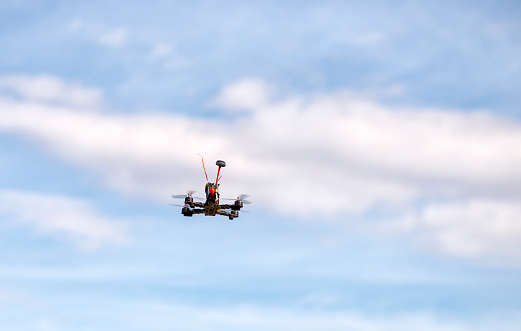 Suggestions for Purchasing the Right FPV Drone A racing drone is a tiny drone that is purposely built for competition in the first person view (FPV) racing and other racing events which occur around the world. FPV drone racing has grown in popularity as a competitive sport over the last decade. It doesn’t matter if you are a newcomer to the sport or a racer who is seasoned or; FPV racing is certain to take your racing to the following degree. There are several varieties of camera drones which can be used in taking high-quality videos of real estate landscapes and surfing contests. However, FPV racing drones are not similar to these cameras. Below, we will discuss some helpful tips as you look to buy the best FPV racing drone to win a race. If you examine the results of most drone races closely, you will observe that almost every drone that wins a race was custom-built by the owner. You will find that the competitors in drone races modify their drones a lot of times. The same as in other competitive flying sports, the racers in drone races are always looking for new gear and tweaks


 The New World of Amazon Kindle Amazon Kindle was introduced in to the world in the past few years with no fanfare, but now, the world of electronics and cool tech gadgets cannot do away with these e-readers. For a clearer view, MP3 player signifies music while the Kindle signifies books. Electronic readers combine the best of what are in the books and computers, merges these together, and produces a hand held book reader termed the Kindle. Compared to a small electronic reader, several tried and true book lovers would still prefer the old-fashioned way of reading books. On the positive side, the Kindle has slowly gaining grounds in turning old-fashioned book worms into die-hards e-reader fans. Although book lovers are still sceptical with the idea of having an e-reader, they are already recognizing the convenience aspect of having a small gadget with a seemingly like library, rather than a suitcase of books for example if they are travelling. Imagine yourself lying on the beach during your vacation and you can read any book you like with just a touch of a button. The idea of replacing the textbooks in schools with this gadget is already floating,